

Unwanted 72 and iPill: When and How to Take It, How It Works, and Side Effects on the Body
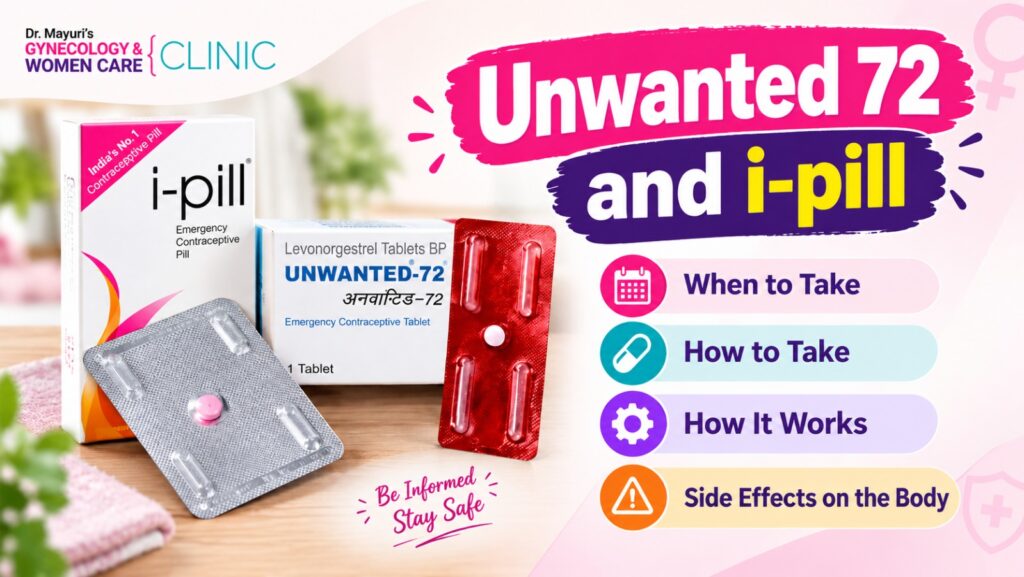
Emergency contraceptive pills like iPill and Unwanted 72 are widely used, but also widely misunderstood. Many women aren’t sure exactly when to take them, how they work, whether they’re safe, or what side effects to expect. This guide covers everything — from the correct timing and dosage to effectiveness, side effects, and the most frequently asked questions about these pills.
What Are Emergency Contraceptive Pills?
As the name suggests, emergency contraceptive pills are meant to be used only for emergencies — not as a routine or regular method of birth control. Emergency contraception includes both pills (like iPill and Unwanted 72) and the copper IUD, but this guide focuses specifically on the pill form.
How Do iPill and Unwanted 72 Work?
The main mechanism of action of these pills is preventing or delaying ovulation — that is, blocking the release of the egg from the ovary. Here’s how it works in different scenarios:
- If taken before ovulation: The pill blocks ovulation, so no egg is released, and the sperm has nothing to fertilize — preventing pregnancy.
- If ovulation has already occurred: The pill can still work by preventing the egg and sperm from fertilizing.
- If pregnancy has already implanted: The pill will not work. It cannot terminate an existing pregnancy. If you don’t wish to continue the pregnancy at this stage, you would need to consult a doctor about medical termination or other appropriate options.
Availability and Composition
Both iPill and Unwanted 72 are available over the counter at any medical store — no doctor’s prescription is required to purchase them. They’re priced in the range of roughly ₹90 to ₹123 per tablet.
The main active ingredient in both is Levonorgestrel, 1.5 mg. This is the same hormone used in regular birth control pills, but at a much higher dose — regular contraceptive pills contain only a fraction of this amount, while the emergency pill packs a much larger dose specifically to prevent pregnancy after unprotected intercourse.
When and How to Take Unwanted 72 / iPill
- These pills must be taken within 72 hours (3 days) of unprotected intercourse.
- Timing matters a lot for effectiveness:
- Taken within 72 hours, the success rate is around 85%.
- Taken immediately after unprotected intercourse, effectiveness can go up to 95-97%.
- The longer you delay, the lower the effectiveness — waiting until close to the 72-hour mark significantly reduces how well it works.
- It comes as a single tablet in the pack, and should be swallowed with water, just like any regular tablet.
- If vomiting occurs within about 1-2 hours of taking the tablet, the medication may not have been fully absorbed, and you will need to repeat the dose with another tablet.
When Should You Actually Use Emergency Contraception?
Emergency contraceptive pills are meant for specific situations, such as:
- You had unprotected intercourse without using any birth control method.
- Condom failure — the condom broke, slipped off, or was used incorrectly.
- Missed contraceptive pills — if you’re on regular birth control pills and missed one or more doses.
- IUD-related issues — if your copper T or other intrauterine device (like a multi-load IUD) was expelled or removed, and you haven’t started another method of contraception, but had intercourse in the meantime.
- Delayed contraceptive injection — for example, if you take a 3-monthly injection (like Antara) and you’re more than 4 weeks late for your next dose, and have had unprotected intercourse.
Outside of these situations, emergency contraceptive pills should not be used as a substitute for regular contraception.
Side Effects of Unwanted 72 / iPill
Like any medication, these pills can cause some side effects, though not everyone experiences them:
- Headache
- Dizziness
- Nausea or vomiting
- Mild abdominal pain
- Breast tenderness or heaviness
Most of these side effects are temporary and usually resolve within about 7 days, as the medication clears from the body.
Effect on Menstrual Cycle
One of the more notable side effects is its impact on your menstrual cycle:
- You may notice withdrawal bleeding or light spotting before your expected period.
- Your period can arrive earlier or later than your usual cycle date.
- The intensity or pattern of period pain may change compared to your normal cycle.
Taking the pill occasionally (once in a while) usually doesn’t cause a major or lasting effect on your cycle. However, if you use it repeatedly or frequently — especially as a substitute for regular contraception — it can lead to hormonal imbalance and long-term menstrual irregularities, which may require medical consultation to resolve.
Frequently Asked Questions
Q1. Can I use Unwanted 72 or iPill regularly instead of a normal contraceptive? No. These are not meant for regular use. If you use them only for genuine emergencies, you get the intended benefit with fewer side effects. Using them frequently — like relying on them every time you have unprotected intercourse — is not safe and increases the risk of period irregularities and other side effects.
Q2. Can I take it more than once in the same week or cycle if needed again? This isn’t a normal contraceptive pill, and it’s not meant to be taken repeatedly like that. Frequent use can significantly affect your menstrual cycle and overall hormonal balance, so it should be reserved strictly for genuine emergencies.
Q3. Will taking this pill affect my future pregnancy or fertility? The drug (Levonorgestrel) is cleared out of your body within about 7 days, so a single or occasional dose does not directly affect your future pregnancy chances. However, if you use it frequently and it starts causing irregular periods, that irregularity can indirectly make it harder to track ovulation and conceive later. The pill itself doesn’t damage fertility, but repeated use and the resulting cycle disruption can create practical difficulties.
Q4. Is it safe for breastfeeding mothers? Yes, it’s considered safe for breastfeeding mothers who need it after unprotected intercourse. It doesn’t affect the quantity or quality of breast milk, nor does it have any adverse effect on the baby.
Q5. Does body weight affect how well the pill works? Yes, weight can play a role. The standard 1.5 mg dose works well for an average body weight, but for women who are overweight (generally in a higher weight or BMI category), the standard dose may not always be sufficient, and a higher dose might be needed. It’s best to consult a doctor in such cases rather than self-adjusting the dose, so you get the correct strength based on your body weight.
Q6. Will this pill definitely affect my periods? Menstrual cycle changes are one of the most common side effects — but this doesn’t mean it happens to everyone every time. An occasional dose typically causes little to no noticeable change. It’s when the pill is used regularly, or as a habitual response to unprotected intercourse, that irregular periods become more likely and more pronounced, sometimes requiring a doctor’s evaluation.
Conclusion
Unwanted 72 and iPill are effective options for genuine emergency situations, but they are not designed — and should never be used — as a routine method of contraception. Understanding the correct timing, dosage, and situations where they’re actually needed helps you use them safely and effectively, while minimizing side effects. If you find yourself needing emergency contraception frequently, or you’re experiencing ongoing period irregularities after using it, it’s important to speak with a doctor about a more suitable, regular contraceptive method for your needs.
Have questions about emergency contraception or need help choosing the right regular birth control method? Consult at Dr. Mayuri Kothiwala for personalized guidance. Book your appointment today.
