How to Calculate Your Ovulation Day: Ovulation Symptoms, Signs and Fertile Window
- August 27, 2026
Knowing your ovulation day is one of the most important pieces of information for any woman — whether you’re trying to conceive or trying to avoid an unplanned pregnancy. Since ovulation timing depends on your menstrual cycle length, understanding how it works can help you plan intercourse more effectively for either goal. This guide explains what ovulation is, how to calculate it based on your cycle, the physical symptoms that signal ovulation, and the different tracking methods available — from simple calendar tracking to ovulation predictor kits.
What Is Ovulation?
To understand ovulation, it helps to know a little about the female reproductive system. Every woman is born with a large number of immature eggs, known as primary follicles, inside her ovaries. In each menstrual cycle, only one follicle fully matures and releases an egg — this release is called ovulation. The outer layer of the follicle that remains after the egg is released is called the corpus luteum, which goes on to support early pregnancy if fertilization occurs.
The Hormonal Trigger Behind Ovulation
Ovulation is controlled by a surge in Luteinizing Hormone (LH), which spikes sharply about 36 to 40 hours before ovulation. The LH surge is responsible for triggering the egg’s release from its follicle. Following ovulation, the corpus luteum begins producing progesterone, a hormone needed to support a possible pregnancy. When pregnancy does not happen, the corpus luteum breaks down, progesterone decreases, and menstruation begins.
How to Calculate Your Ovulation Day
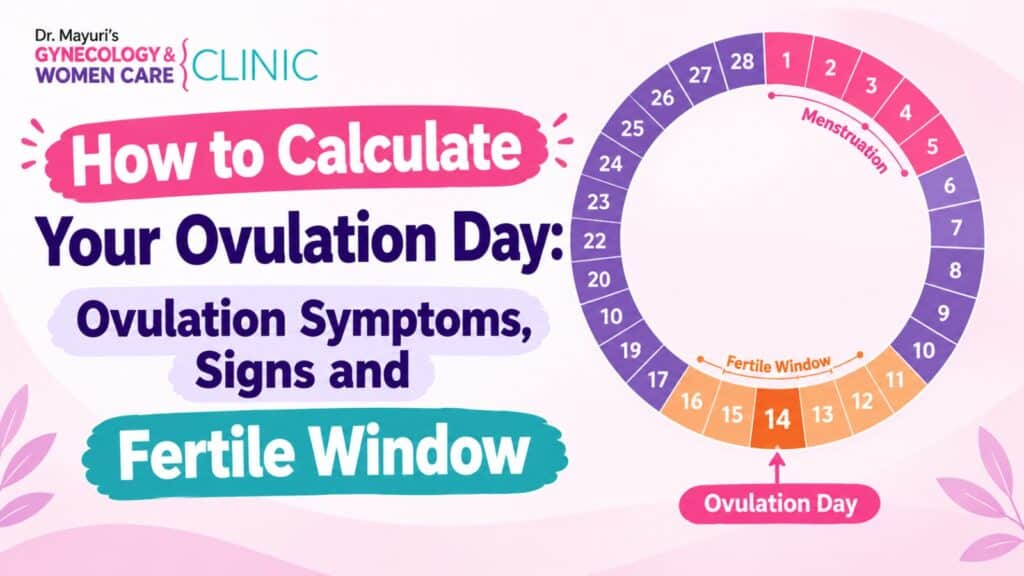
The key to calculating ovulation lies in understanding one consistent fact: ovulation typically occurs 14 days before your next period — regardless of how long your total cycle is.
For a Regular 28-Day Cycle
If your cycle is a consistent 28 days, ovulation usually happens around Day 14 of your cycle. For example, if your period starts on the 1st, your next period would be expected around the 29th (28 days later), which means ovulation would fall around the 14th.
For Cycles Longer or Shorter Than 28 Days
Not everyone has a perfect 28-day cycle, and that’s completely normal — cycles ranging from 21 to 35 days are all considered within the normal range. To calculate ovulation for any cycle length:
- Note the date your next period is expected.
- Subtract 14 days from that date.
- This gives you your approximate ovulation day.
For example, with a 35-day menstrual cycle, ovulation is expected around Day 21 of the cycle (35 minus 14). This is because the time from the start of your period to ovulation can vary, but the time from ovulation to the next period is almost always fixed at 14 days.
Important note: This calendar method works best for women with fairly regular cycles. If your cycle length varies a lot from month to month, this method alone won’t be very reliable, and you may need one of the tracking methods described below.
What Is the Fertile Window?
Once you have estimated your ovulation day, the next step is to understand the fertile window around that time:
- Once released, the egg can survive for approximately 24 hours.
- In comparison, sperm may remain alive inside the female body for around 48–72 hours.
Because of this difference, the most fertile days are from about 3-4 days before ovulation through the day of ovulation itself. Having intercourse during this window significantly increases the chances of conception, since sperm can already be present and waiting when the egg is released.
Many women miss their fertile window simply because they don’t know their exact ovulation date and try to time intercourse randomly — which greatly reduces the chances of conceiving.
Ovulation Symptoms: How Your Body Signals Ovulation
Along with calculation methods, your body also gives natural signs that ovulation is approaching:
1. Changes in Cervical Mucus
This is one of the most reliable natural indicators. Throughout your cycle, the thickness and consistency of vaginal discharge changes:
- Right after your period ends, discharge is minimal.
- As your cycle progresses, it becomes thicker.
- As ovulation approaches, the discharge becomes thin, clear, and slippery — often stretching between two fingers like a thin thread, similar to raw egg white.
- After ovulation, the discharge thickens again and gradually reduces until the next period.
This thin, stretchy, egg-white-like discharge is a strong sign that ovulation is about to happen or is currently happening — and it’s considered one of the best times to plan intercourse if trying to conceive.
2. Basal Body Temperature (BBT) Rise
Due to the progesterone increase after ovulation, a woman’s body temperature rises very slightly — typically by around 0.5°F. To track this:
- Measure your temperature every morning immediately after waking up, before getting out of bed, drinking water, or any activity.
- Use the same method each day (oral, for example) and record it on a chart.
- Track this over 3-4 cycles to identify your pattern.
Limitation: BBT only confirms that ovulation has already happened — it doesn’t predict ovulation in advance, since the temperature rise occurs after the egg has been released. It’s also less reliable if measurements aren’t taken consistently at the same time each day.
Ovulation Predictor Kits (Urine LH Test)
Ovulation predictor kits work similarly to home pregnancy test kits, but instead of detecting hCG, they detect the LH surge in urine.
- Testing usually begins 2-3 days before your expected ovulation date.
- A drop of urine is placed on the test strip daily until a positive result appears.
- A double line indicates the LH surge has been detected, meaning ovulation is likely to happen within the next 24-36 hours.
These kits are fairly effective for predicting ovulation in advance, though they are relatively more expensive and, like any test, are not 100% accurate — false positives and false negatives can occur.
Other Clinical Tests for Ovulation
For couples undergoing fertility treatment, doctors may sometimes recommend more specific tests, including:
- Day 21 Progesterone Test: A blood test done around day 21 of the cycle to check progesterone levels, confirming whether ovulation has occurred. This isn’t required for everyone and is usually recommended for couples facing difficulty conceiving.
- Endometrial Biopsy: In select fertility evaluation cases, a small tissue sample from the uterine lining may be studied to assess whether ovulation is happening as expected.
These tests are generally reserved for couples who are trying to conceive without success and are evaluated further by their doctor — they aren’t necessary for routine ovulation tracking.
What If Your Cycle Is Very Irregular?
If your cycles are highly unpredictable — sometimes early, sometimes very late — the calendar method won’t give you a reliable ovulation date. In these situations, a broader strategy may be advised: having intercourse on alternate days between approximately Day 10 and Day 18 of the cycle. This wider window helps cover the likely ovulation period even when the exact date can’t be pinpointed.
FAQs: Ovulation Questions
Q1. How many days after my period does ovulation happen?
It depends on your total cycle length. Ovulation usually happens around 14 days before the next expected period, rather than exactly 14 days after the previous period.
Q2. What is the most reliable sign of ovulation?
A combination of methods works best. Cervical mucus changes (thin, clear, stretchy discharge) combined with an ovulation predictor kit gives a fairly accurate picture of your fertile window.
Q3. Can I get pregnant right after my period?
It’s uncommon but not impossible, especially with a short or irregular cycle, since ovulation can occur earlier than expected in some cycles.
Q4. Does basal body temperature predict ovulation in advance?
No, BBT only confirms after ovulation has already occurred, since the temperature rise happens due to hormonal changes post-ovulation.
Q5. How long is the egg viable after ovulation?
An egg can live for roughly 24 hours after release, whereas sperm may survive for 48–72 hours. Therefore, the days before ovulation are generally the most fertile.
Conclusion
Understanding your ovulation day gives you far more control over your fertility — whether your goal is to conceive or to plan around your cycle. For women with regular cycles, a simple calendar calculation (period date minus 14 days) works well, while irregular cycles may need additional tools like ovulation predictor kits, cervical mucus tracking, or a doctor’s guidance. Using more than one method together generally provides a more accurate understanding of your fertile window.
Trying to conceive or want help understanding your cycle better? Consult Dr. Mayuri Kothiwala for personalized guidance on fertility planning. Book your appointment today.