Why Do Women Get Lower Back Pain? Causes, Prevention, and Expert Advice
- September 8, 2026
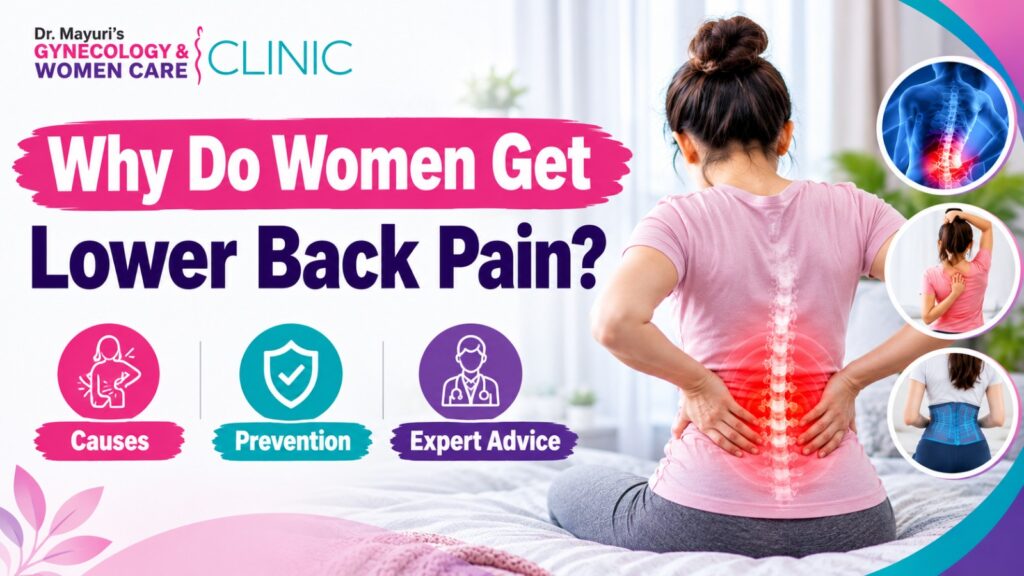
Almost every woman experiences lower back pain at some point in her life — sometimes it’s mild and manageable, and sometimes it’s severe enough to disrupt daily life. Since there’s often limited awareness about the many different causes behind this pain, women frequently end up worrying unnecessarily or, worse, ignoring pain that actually needs medical attention. This guide walks through the most common causes of lower back pain in women, when it’s a sign of something serious, and practical remedies and prevention tips you can use at home.
1. Period Pain (Menstrual Cramps)
The most common cause of lower back pain in women is simply menstrual pain. Most women experience some degree of pain when their period starts — some more, some less, but almost everyone experiences it to some extent.
- This pain usually begins as soon as bleeding starts and typically lasts 2 to 3 days at most.
- It can show up as cramps in the lower abdomen or as lower back pain, or often both together.
- For most women, this pain is manageable with basic pain relief medication.
When it’s a concern: If the pain is very severe and doesn’t respond to medication, it could indicate an underlying issue — such as an infection, a growth, heavy bleeding, an ovarian cyst, or simply a family history of heavier or more painful periods. In such cases, it’s important to consult a doctor rather than continuing to endure the pain.
A Word on Period Pain Medication
There’s a common — and unnecessary — hesitation among mothers to give their daughters pain medication for period cramps, sometimes out of fear that it will cause problems with future fertility or the uterus. This is a myth. Pain relief medications, when taken at the correct dose as advised by a doctor, are cleared out of the body within about 24 hours and carry no long-term risk.
If period pain is severe enough to disrupt a young girl’s schooling, activities, or daily life, avoiding medication doesn’t help her — it only adds unnecessary suffering. Managing the pain properly, with one or two tablets as needed (commonly recommended up to two to three times a day, or even just once a day for milder pain), allows for a much better quality of life without any real risk.
2. Endometriosis
Endometriosis is a condition where the tissue lining the uterus (the endometrium) starts growing outside the uterus. This condition causes far more severe pain than typical period cramps, with some distinctive features:
- Pain can start even a week before the period begins and continue until the period ends.
- The pain is often extremely severe and may greatly interfere with your everyday activities.
- Regular period pain medications often don’t provide relief in these cases.
- Some women may also experience pain during intercourse or while passing stools.
If you’re experiencing this kind of prolonged, severe pain that doesn’t respond to normal medication, it’s important to consult a doctor without delay. Diagnosis usually involves a sonography (ultrasound), since endometriosis often appears as a cyst-like growth on the ovary. If the sonography doesn’t show anything unusual, endometriosis can be ruled out, and the pain is likely just a more intense version of normal period pain, which can then be managed with regular medication.
3. Pregnancy
Lower back pain is extremely common during pregnancy, for two different reasons depending on the stage:
- Early pregnancy: As pregnancy begins, mild lower abdominal and lower back pain can occur as part of the body adjusting.
- Later pregnancy (7th-8th month onward): As the baby grows, your posture changes and your center of gravity shifts, which puts extra strain on the lower back.
While lower back pain during pregnancy is generally normal, it’s worth consulting your doctor if it becomes significantly troublesome. In the meantime, a few simple adjustments can help:
- Keep your back well-supported — use a cushion or pillow while sitting on a stool or sofa, and avoid hard surfaces.
- Place a pillow between your knees when sleeping at night.
- Use a hot water bag for warm compresses on the lower back.
- Make small postural changes — avoid excessive bending, and if you need to pick something up from the floor, bend your knees rather than straining your back.
- Avoid heavy lifting — try to limit yourself to about 2-3 kg at a time if you’re prone to back pain.
4. Muscle Strain or Pull
A sudden strain or pull in the back muscles can also cause lower back pain — usually as a result of an abrupt movement, overstretching, or physical strain. This type of pain is often accompanied by a feeling of stiffness in the affected muscles.
The good news is that muscle strains are typically short-lived — with some rest, care, and timely use of pain relief or a warm compress, they usually resolve within 2-3 days.
5. Sciatica
Sciatica occurs when the sciatic nerve becomes compressed, causing a distinctive tingling or electric-shock-like sensation in the lower body — sometimes radiating down one leg along with the lower back. Some women also experience weakness or numbness in the lower body.
If you’re experiencing this kind of severe, unusual sensation — vibrations, tingling, or shock-like feelings — it could indicate nerve compression, and you should see a doctor promptly.
6. Spine-Related Conditions
Other, less common causes of lower back pain include conditions affecting the spine itself, such as disc degeneration and slipped disc, both of which can cause nerve-related back pain. These conditions typically require evaluation by an orthopedic specialist or neurologist, and should be addressed promptly.
Home Remedies for Lower Back Pain Relief
Regardless of the exact cause, several home-based remedies can help manage and reduce lower back pain:
- Heat therapy: Applying a heat pad to the lower back relaxes tense muscles, improves blood circulation, and supplies more oxygen and nutrients to the area — supporting healing and easing muscle spasms. This can be used daily, especially if you experience frequent back pain, or specifically on days when you feel fatigued or have had a particularly strenuous day.
- Warm baths or showers: A warm bath (or shower, if a tub isn’t available) helps relax the back muscles and provides overall relief from fatigue and tension.
- Pain relief medication: If needed, pain relievers such as aspirin, paracetamol, or ibuprofen (as advised by your doctor) can help. If muscle spasms are involved, a muscle relaxant may also be recommended alongside a pain reliever. Always check with your doctor first, especially to rule out any allergies.
- Back-strengthening exercises: Regular strengthening and stretching exercises for the back help reduce stiffness and lower the chances of muscle spasms. Women who don’t exercise regularly tend to have stiffer back muscles and are more prone to spasms.
- Supportive seating and sleeping posture: If you sit at a desk for long hours, make sure your chair properly supports your lower back — a cushion or pillow can help. Similarly, placing a pillow between your knees while sleeping can significantly reduce lower back discomfort.
When Should You See a Doctor?
You should consult a doctor promptly if you experience any of the following:
- Severe pain that doesn’t improve with regular pain medication.
- Tingling, numbness, or any unusual sensation in your legs or lower body.
- Back pain that started after an injury or accident.
- Severe pain specifically during periods or intercourse.
Conclusion
Lower back pain in women can stem from a wide range of causes — from something as common as period cramps to more specific conditions like endometriosis, pregnancy-related changes, muscle strain, or nerve compression. While mild, occasional back pain can usually be managed at home with rest, heat therapy, and appropriate pain relief, persistent or severe pain deserves proper medical evaluation rather than being ignored. There’s no need to “tough it out” — timely treatment can significantly improve your quality of life and prevent the pain from affecting your daily activities, sleep, or overall wellbeing.
Struggling with persistent lower back pain, period pain, or symptoms of endometriosis? Consult with Dr. Mayuri Kothiwala for a proper diagnosis and personalized treatment plan. Book your appointment today.